
Marion Scheduled and Actual Release
A future date can describe an eligibility point, a sentence expiration, or another calculated event. It does not always describe the physical exit. Tennessee's public FOIL explanation promises sentence and release information but does not promise a field literally called “Projected Release Date.” Preserve the label shown on the live record. A parole eligibility date is the first point at which release may be considered under the applicable law. A sentence expiration or end date describes the calculation's endpoint. An actual release date records an event that occurred.
Marion County jail cases require a different path. A pretrial detainee has no computed sentence-release date. The person may leave after bond is accepted, a court order enters, charges are resolved, or another lawful event occurs. A locally sentenced person may have a calculation affected by jail credit and the court's judgment. The Marion County Jail and clerk are the sources for that local calculation, not a guessed percentage.
- Eligibility date
- The earliest lawful point for consideration under the governing sentence rules.
- Expiration date
- The calculated end of a sentence, subject to the record's exact terms.
- Actual release
- The date custody physically ended for that agency.
- Detainer
- A request or legal hold that can cause transfer to another custodian instead of community release.
Find a Marion Release Date
Begin by identifying who holds the person. The official Marion iSOMS portal covers the county jail. TDOC FOIL covers current and former felony offenders in state custody or supervision. A federal sentence belongs in the BOP locator, while an ICE transfer belongs in the immigration system. A person can move between those systems, so an old county result may describe only one link in the custody chain.
- For a Marion County detainee, check the official current and timed iSOMS views. A populated Release Date and Released marker confirm the portal recorded an exit.
- For a local sentence, ask jail staff for the release calculation and the clerk for the judgment, sentence alignment, and jail-credit record.
- For a Tennessee felony sentence, search TDOC FOIL by name or TDOC number and inspect every sentence row.
- Copy the exact field labels, status, location, and access date. Do not rename eligibility as projected release.
- Check the Board process if parole applies, but do not treat a hearing or grant as physical release.
- Use VINE for a custody-change alert, then confirm the event with the source agency.
The Marion County release-search hub explains how to obtain the jail release sheet when the online card is missing or unclear. Use that full county release record path for the actual time, authority, and transfer destination.
A no-result needs scope. FOIL can omit a county-only misdemeanor or bond release because it is a state felony system. The live jail list can omit someone who has left, transferred, or whose name differs. A future date attached to a prison location does not mean the person is already released.
Note: Record the custodian and field label with each date, since similar-looking dates can carry very different legal meanings.
TDOC Release Information for Marion
TDOC calls its statewide public system Felony Offender Information Lookup. The official page says FOIL may provide photograph, status, location, offense, sentence, parole-hearing status, and release information for current and former felony offenders. “Parole” and “probation” are active community statuses. “Inactive” is a strong lead that the TDOC record is no longer active, but the record's full detail should be read before calling the sentence discharged.
Use legal name variations and the TDOC number when known. Compare the date of birth and other available identifiers so a namesake is not selected. Open every conviction and sentence row. A person can have concurrent sentences, which run together, or consecutive sentences, which run one after another. Court amendments, revocations, and credit changes can also alter the calculation.
The official FOIL page leads into the state search and describes its scope. Review the TDOC FOIL explanation before interpreting a Marion County state sentence.
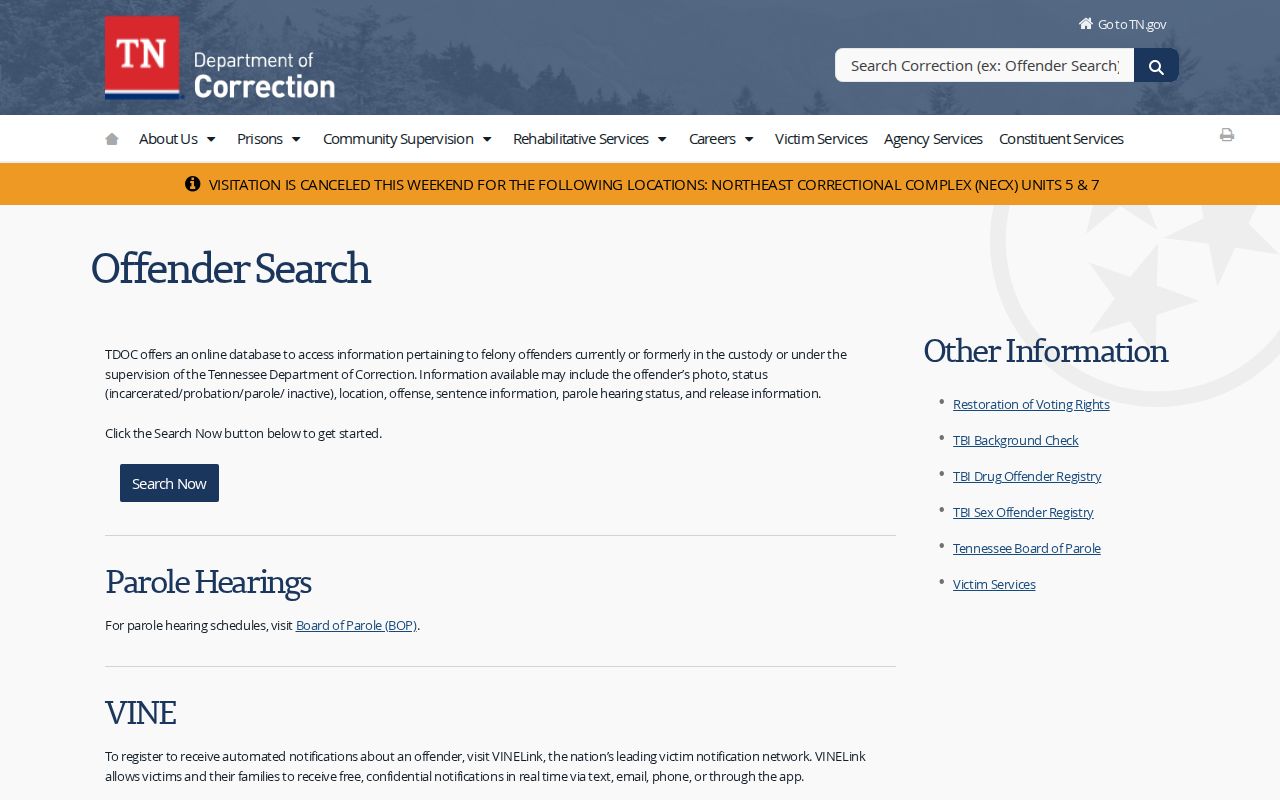
The live result, not the overview screenshot, supplies the person-specific status and exact date labels.
A captured FOIL search result can show how state sentence and release information is arranged. Open the current FOIL search to check whether its fields or terminology have changed.
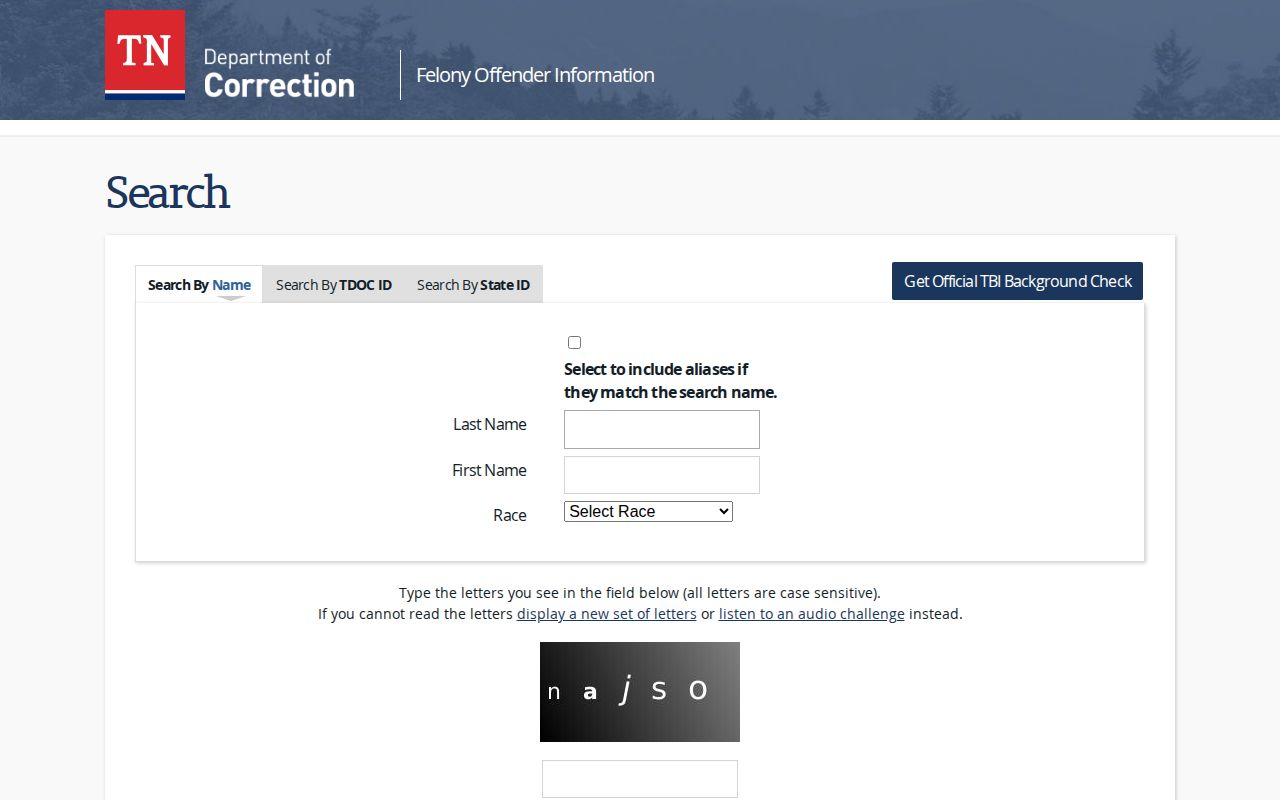
Read the whole result because one date or one sentence row may not capture the person's full state custody status.
Marion Release Credits and Eligibility
Tennessee does not have one rule that everyone serves 85 percent. Start with the judgment: offense and offense date, sentence length, offender range, whether terms run together or in sequence, and presentence jail credit. TDOC then applies the provisions that govern the specific sentence. Parole requires Board action where applicable, and another hold can prevent community release even after one sentence permits exit.
T.C.A. §40-35-501 contains offense, date, range, and sentence-specific release eligibility rules. Examples for ordinary ranges include percentages for especially mitigated and Range I, II, and III sentences, but those examples cannot be applied without the judgment. The statute also contains offense-specific provisions requiring 85 or 100 percent. For covered offenses in different date periods, the effect of credits changes. Quote the current subsection that governs the actual offense.
T.C.A. §41-21-236 governs sentence-reduction credits. It authorizes monthly credits, generally up to sixteen days per month, with up to eight for good institutional behavior and eight for satisfactory program performance. Credits are awarded, reviewed, and can be removed. Qualifying educational or program credits have exclusions. They are not an entitlement.
The effect also depends on the date and length of the sentence. For qualifying sentences over two years for offenses from July 2024, credits may affect the path to parole eligibility rather than shorten expiration. Earlier offenses and shorter later sentences follow the applicable statutory text. That is why multiplying the sentence by a single percentage can produce a false Marion County projected release date.
Marion Jail Sentence Calculations
The state statute also reaches some local sentences. Felony offenders serving at least a year locally may receive applicable good-behavior credits, while documented behavior can affect presentence felony-credit recommendations. For misdemeanants, the sentencing court sets a release percentage among allowed increments, and credits cannot reduce it beyond the statutory limit.
Marion County does not publish a county calculation sheet or separate good-time policy online. Ask for the existing calculation for the named local sentence. Useful components include the judgment, sentence start, presentence credit, concurrent or consecutive alignment, authorized local credit, and any hold. Do not ask staff to create a hypothetical date if no such record exists.
The clerk's judgment explains the legal sentence. Jail staff can address the custodial calculation and processing. Pair both records. A court order authorizing release may precede the physical exit, while an iSOMS Release Date without the court file may not explain why the person left.
Note: A Marion iSOMS bond amount does not prove payment, release authority, or completion of jail processing.
Why Marion Release Dates Change
A calculation changes when its inputs change or another legal authority blocks the planned exit. Some changes move an eligibility point. Others leave the sentence date intact but prevent release to the community. The distinction matters because the resulting event may be a transfer.
| Factor | Possible effect | Record to check |
|---|---|---|
| Credit award or loss | Changes the statutory calculation where credits apply | TDOC or jail calculation record |
| New or amended court order | Changes sentence length, alignment, or credit | Marion County judgment and docket |
| Consecutive case | Another term begins after the first | All sentence rows and judgments |
| Detainer or hold | Causes transfer instead of community release | Release sheet and receiving-agency record |
| Parole denial or deferral | No conditional release at the eligibility point | Board decision and FOIL |
| Revocation | Can return a supervised person to custody | Court, Board, and TDOC records |
A future date is therefore a snapshot of a calculation. Check it close to the expected event, and again after any court or Board action. If the person remains at a prison or county jail location, they remain in custody despite the future date.
Marion Release Dates and Detainers
TDOC's release-notification policy makes the custody-chain problem concrete. It distinguishes release type and date, sentence expiration, and release on a detainer to a Tennessee county facility. It also directs recipients toward SAVIN after a county handoff. One agency may accurately report “release” even while another agency takes custody.
When a Marion record names another county, TDOC, USMS, or ICE, ask for the receiving agency and transfer time. Then continue in that custodian's official system. A Marion-to-TDOC move is followed in FOIL. A federal sentenced person is followed in the BOP locator. An ICE transfer requires the ICE locator and, when needed, the appropriate ERO route.
Use the TDOC notification policy to understand how the state labels these events. Its field distinctions show why a custody event, sentence expiration, and community release cannot be collapsed into one date.
Confirm Marion's Actual Release Date
For county custody, confirm a populated Release Date and Released marker in iSOMS, then call or request the release sheet when reason and destination matter. For state custody, check the updated FOIL status and release information. A VINE alert can prompt that second check. Instructions for selecting the right feed and registering are on the Marion County VINE Inmate Check page.
Write down the event, time, reporting agency, and access date. Ask whether it was community release or transfer. If the court authorized release but the jail still shows custody, processing or another hold may remain. If FOIL shows parole eligibility, wait for the Board outcome and later custody confirmation.
Reliable verification joins the timeline: judgment, calculated date, decision, and actual exit. None should be forced to answer a question it was not designed to answer.
Keep a dated copy or note of each official result when the date is important. Online status can change after recalculation, transfer, a Board vote, or final processing. For durable proof, request the jail release sheet, court judgment, Board decision, or TDOC archived record that owns the relevant event. A well-kept timeline also makes conflicts easier to resolve: the calculation explains what was expected, while the later custody record shows what actually occurred.